

01 · The Precision of Post-Authentication Exploitation
In our companion memorandum (Memorandum 05: Pre-Authentication Attack Vectors & Active Perimeter Defense), we documented how threat actors scan for unhardened gateways, leverage SQL injection parameters, and exhaust runtime resources to breach corporate authentication layers.
While that analysis detailed the entry mechanics, this briefing addresses the targeted fallout: what occurs once administrative control is established.
Commercial executives often assume a breached website results in nothing worse than visual defacement or broken styling. In technical reality, modern threat actors avoid visual disruption entirely. Broken pages alert ownership immediately, prompting emergency server restarts.
Instead, attackers seek silent operational persistence. Once root access is achieved, your production web server is converted into a weaponized staging ground designed to divert capital, intercept business transactions, and compromise confidential communications without triggering alarms.
NETWORK RECONNAISSANCE TELEMETRY
(ADMINISTRATIVE GATEWAY BREACHED)
                 │
                 ▼
(SILENT WEBSHELL & TEMPLATE PERSISTENCE)
                 │
 ┌───────────────┼────────────────────────┬────────────────────────┐
 ▼               ▼                        ▼                        ▼
Rogue Payment    Domain-Authenticated     Traffic Cloaking &       Internal Mailbox
Gateways &       BEC Wire Redirection     "Maintenance"            & Confidential
Custom Code      & Phishing Campaigns     Diversion                Intelligence Hijack
02 · Phase 1: Rogue Ingestion Code & Custom Payment Diversion
Once an attacker has administrative privileges, they can directly edit theme files, upload arbitrary PHP code, or install custom unvetted plugins:
1. Bespoke Form & Gateway Injection:
Attackers inject custom-coded payment intake forms, spoofed deposit fields, or rogue merchant gateways directly into your live web pages. To a prospective client, residential buyer, or project partner submitting a retainer, permit fee, or project deposit, the form looks completely native to your brand.
2. Silent Capital Exfiltration:
The injected code intercepts payment credentials or routes transactions through an unmonitored offshore merchant processor before submitting a generic success response. The organization does not merely lose the transaction; it incurs catastrophic chargeback liabilities, merchant account termination, and legal exposure.
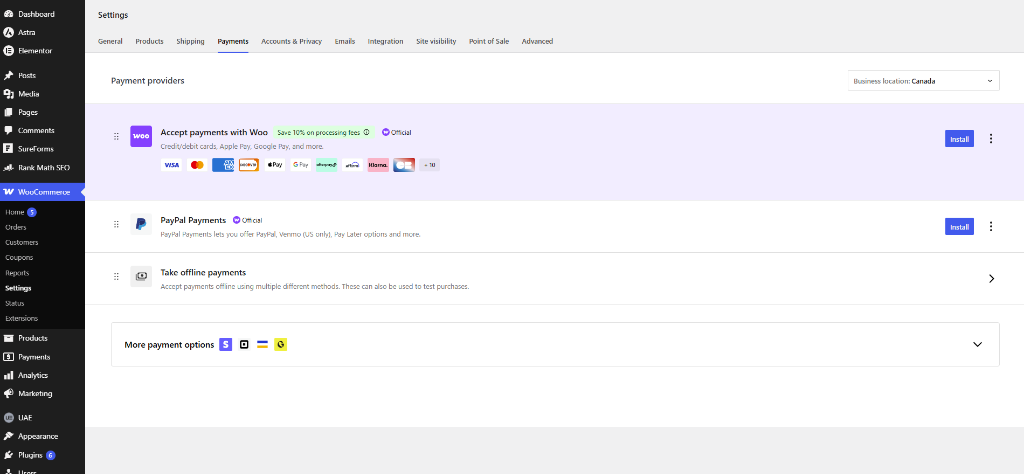
EVIDENTIARY CAPTURE:Live application payment provider panel showing exposed administrative hooks capable of routing transactions, offline payments, and third-party merchant gateways.
03 · Phase 2: Domain Weaponization & Business Email Compromise (BEC)
Gaining access to your web server provides access to your domain's sending reputation and mail infrastructure:
1. The Trusted Domain Exploit:
An established commercial domain carries high trust metrics across global mail servers. Attackers install server-side mailers directly within your file tree. They dispatch thousands of targeted phishing emails or fraudulent invoices originating from your authentic domain name (billing@companydomain.com). Because the messages originate from your genuine, authorized IP address, corporate spam filters fail to detect the fraud.
2. Spoofed Wire Transfers & Fraudulent Contact Numbers:
Attackers harvest ongoing billing conversations, change-order requests, and progress draw schedules. Armed with legitimate project references and vendor names, they dispatch formal notices to your clients instructing them to redirect upcoming Electronic Funds Transfers (EFT) or wire transactions to fraudulent accounts. To ensure their trap holds, they list a fraudulent phone number in the email signature, intercepting incoming verification calls from accounting departments attempting to confirm the wire update.
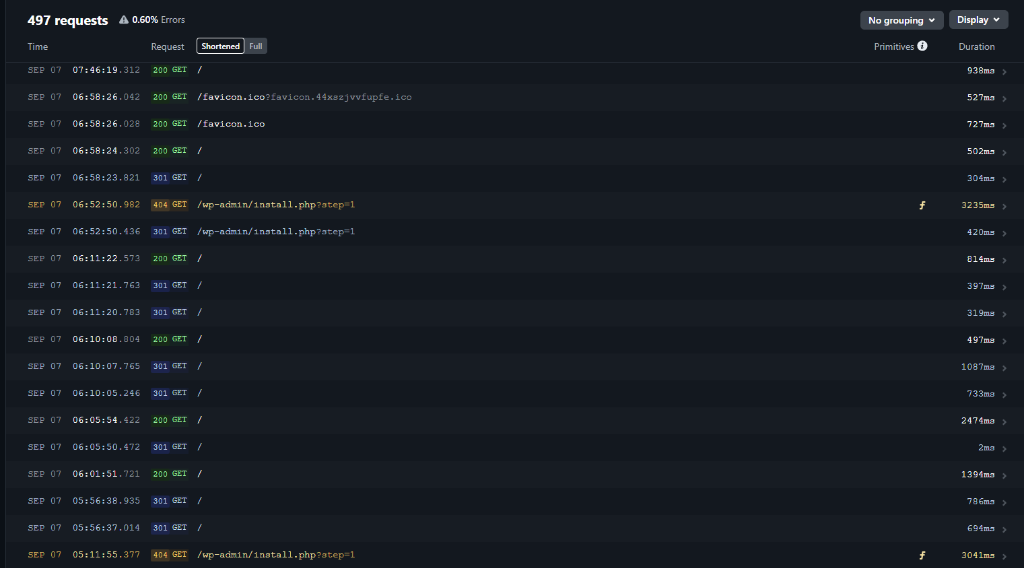
EVIDENTIARY CAPTURE:Live production edge telemetry feed recording automated international crawler reconnaissance probes targeting administrative installation routes.
04 · Phase 3: Traffic Cloaking & The "Maintenance" Reroute
Threat actors do not want corporate staff discovering their presence during business hours. They deploy conditional routing scripts within your web server's routing rules:
1. Conditional Diverts:
If a connection originates from your corporate office IP address or an authenticated staff browser, the website loads normally or displays a convincing "System Under Scheduled Maintenance" splash page. Internal employees assume the web team is executing routine software updates and disregard the disruption.
2. Targeted Exploitation of High-Value Traffic:
Simultaneously, incoming traffic from prospective buyers, tender portals, or search engines is silently diverted to unauthorized landing pages, illicit lead-generation funnels, or credential-harvesting schemes. By the time leadership realizes the site is not actually under maintenance, the domain's organic search index and commercial reputation have collapsed.
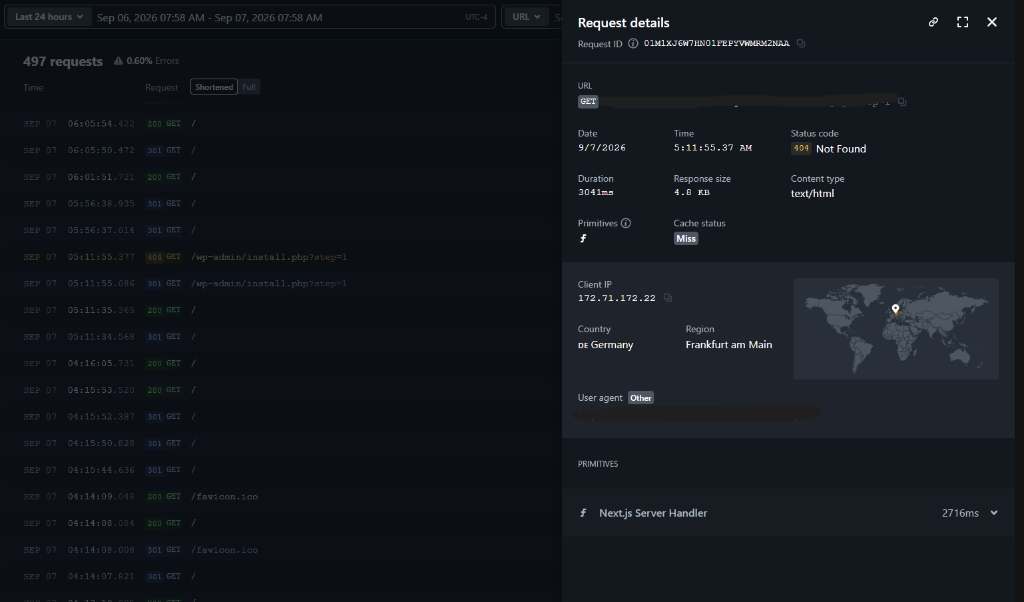
EVIDENTIARY CAPTURE:Granular edge request telemetry isolating an offshore botnet probe (Frankfurt am Main, Germany) dropped with a 404 Not Found response under immutable Next.js edge handling.
05 · Phase 4: Internal Mailbox Compromise & Proprietary Surveillance
Administrative server compromise often serves as a pivot point into broader cloud communications (such as Microsoft 365 or Google Workspace):
1. Config File Interception:
Attackers extract application configuration files, environment variables (.env), and hardcoded SMTP API keys stored in plain text on the server.
2. Mailbox Reconnaissance:
If SMTP credentials or email routing tokens are embedded within the web server, attackers gain direct API access to corporate mailboxes. They review internal executive correspondence, read confidential bid submittals, and access private contract terms.
3. Unauthorized Outbound Dispatch:
Using these compromised credentials, threat actors dispatch fraudulent messages directly from corporate inboxes, masquerading as company principals to authorize emergency capital transfers, manipulate trade contracts, or demand sensitive tax files.
NETWORK RECONNAISSANCE TELEMETRY
# Compromised Production Application Environment (.env / wp-config.php)
DB_PASSWORD=9f8a2c1e7d4b0a8f
SMTP_HOST=smtp.office365.com
SMTP_USER=billing@vectoradvisorygroup.com
SMTP_PASS=kL9#mP2$xQ7!vR4
AWS_SECRET_ACCESS_KEY=wJalrXUtnFEMI/K7MDENG/bPxRfiCYEXAMPLEKEY
06 · The Defensive Mandate: Eliminating Public Attack Surfaces
The damage a skilled threat actor can inflict once inside an administrative panel is limitless: invoice interception, merchant fraud, proprietary bid exfiltration, and communication compromise.
Organizations cannot control the tactics an adversary deploys once persistence is established. What organizations can—and must—control is whether an attacker is ever granted an entry gateway in the first place.
Waiting to react after a six-figure wire diversion has occurred transforms a simple infrastructure maintenance issue into an emergency forensics, litigation, and regulatory catastrophe costing hundreds of thousands of dollars.
True perimeter resilience requires moving away from dynamic, publicly accessible environments. By deprecating dynamic runtime dependencies, transitioning public web presences to database-free static edge architectures (Next.js/React), and isolating all internal gateways behind zero-trust access controls, organizations permanently eliminate the initial foothold threat actors rely on.