

01 · The Unshielded Gateway & Default Surface Exposure
Corporate web architecture rarely fails through dramatic, targeted human intrusions on day one. It fails because of default configurations left exposed to the public internet.
When a standard Content Management System (CMS) is deployed, administrative interfaces—most commonly /wp-admin or /wp-login.php—are generated as direct, public-facing entry points. In high-compliance environments such as commercial banking networks, regional healthcare systems, or municipal school boards, internal administrative gateways are never exposed to public network traffic. They are isolated behind zero-trust network boundaries, virtual private networks (VPNs), and strict IP-whitelisting policies.
In the commercial sector, corporate websites are routinely treated as static brochureware: commissioned, deployed, and subsequently neglected while executive leadership focuses on core operations, contract execution, and client delivery.
Leaving an administrative gateway reachable over public HTTP/S routes is the operational equivalent of installing a commercial vault door directly onto an unmonitored public sidewalk. It serves as a persistent, unshielded beacon signaling to automated network scanners that the underlying infrastructure is unmanaged.
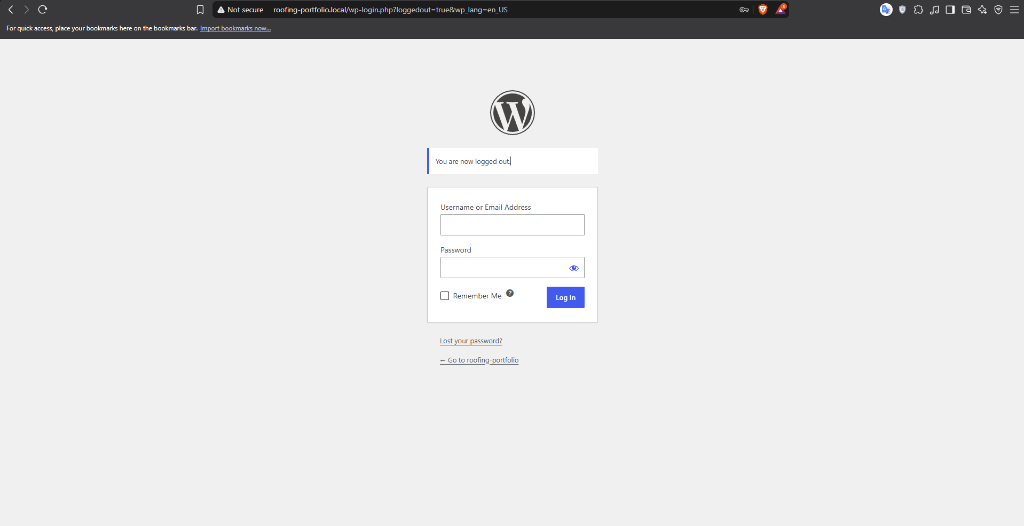
EVIDENTIARY CAPTURE:Live unauthenticated /wp-login.php route reachable directly over public DNS without IP perimeter isolation or zero-trust boundaries.
02 · Phase 1: Autonomous Botnet Telemetry & Traversal
The web does not sleep. Autonomous botnets, distributed scanning clusters, and malicious crawlers run 24 hours a day, 7 days a week, 365 days a year.
These scripts do not require human direction to find an entry point. They methodically cycle through public IP ranges and DNS registries across regional corridors, executing automated directory traversal routines.
The moment a public crawler hits an unprotected route and receives a 200 OK status, your domain is automatically cataloged in an active exploitation queue.
Once identified, secondary botnets launch dictionary attacks, credential stuffing, and automated SQL injection routines targeting authentication endpoints. If underlying plugins or database layers have unpatched vulnerabilities, automated exploit scripts systematically inject SQL commands directly into input parameters, bypassing the login form entirely to extract database credentials or establish an active administrator session.
NETWORK RECONNAISSANCE TELEMETRY
GET /wp-login.php HTTP/1.1  --> 200 OK (UNPROTECTED GATEWAY)
GET /wp-admin/     HTTP/1.1  --> 200 OK (AUTHENTICATION ROUTE LIVE)
GET /xmlrpc.php    HTTP/1.1  --> 200 OK (API LISTENER EXPOSED)
03 · Phase 2: Post-Authentication Compromise & The Trojan Effect
Treating an exposed login panel as "just an administrative web page" fundamentally miscalculates the threat.
Think of your public gateway as the direct central nervous system of your digital identity. If an infection reaches the brain, it does not simply disable the skull—it seizes full motor control of the host.
Once an attacker or automated exploit script gains administrative control, they do not announce their presence by breaking the layout or vandalizing the homepage. Visible damage alerts ownership immediately. Modern threat actors seek persistence and silent operational control.
By the time leadership notices an anomaly, the safety of the perimeter has already been thoroughly compromised, the root files have been rewritten, and remediation comes far too late.
With administrative-level access, threat actors execute four catastrophic vectors:
1. Proprietary Database Exfiltration:
Administrative control yields full read/write access to the application database. Attackers extract private customer directories, staff credentials, proprietary pricing estimates, bid submittals, and confidential project correspondences. This proprietary intelligence can be dumped onto dark web indexes or sold directly to bad actors.
2. Domain Weaponization for Phishing & BEC Fraud:
An established domain carries high domain reputation and trusted delivery scores. Threat actors inject hidden mail-relay scripts or PHP mailers directly onto your web server. They use your trusted corporate domain name to dispatch thousands of targeted phishing campaigns, impersonate corporate leadership, or spoof invoice payment notices. Because the emails originate from your genuine authenticated server, spam filters fail to block them.
3. Rogue Payment Gateways & Fraudulent Intake Forms:
Attackers inject custom-coded payment forms, spoofed deposit fields, or malicious merchant gateways directly into your live web pages. Prospective clients, trade partners, and buyers submitting deposits, transaction fees, or invoices have their capital routed into unmonitored offshore merchant accounts. The firm faces devastating chargeback liabilities, merchant account termination, regulatory scrutiny, and severe reputational damage.
4. Surveillance & Unauthorized Communications Interception:
Persistent server backdoors (webshells) allow actors to monitor incoming form requests, tender inquiries, and sensitive client messages in real time. By observing internal communication cadences, attackers gain access to confidential operational schedules, financial milestones, and executive movements.
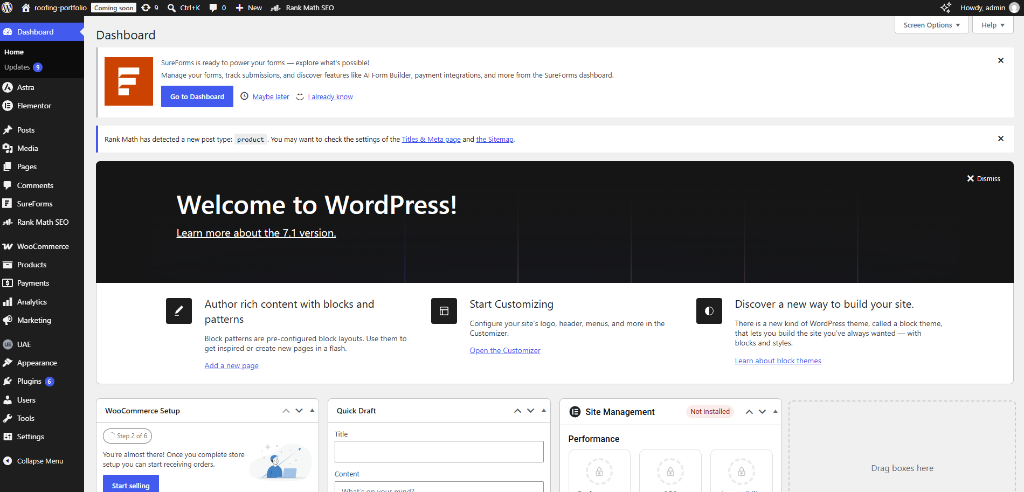
EVIDENTIARY CAPTURE:Full administrative control panel (/wp-admin/) exposing database hooks, theme editors, WooCommerce payment settings, and file upload capabilities.
04 · The Fallacy of the "Unbroken" Perimeter
The most hazardous executive assumption in digital security is:
"Our website has been online for five years without an issue; therefore, our system is safe."
In systems engineering, the absence of an incident to date is merely a matter of scan timing, not perimeter resilience.
Because automated web crawlers and targeted threat actors sweep the internet 24 hours a day, a neglected public gateway is not a stable structure. It is an unsupported load-bearing wall quietly eroding under continuous pressure. You assume the framework is holding firm, but structurally, it can collapse without warning the second a matched exploit payload hits your route.
Waiting for a public breach, a stolen database, or a financial fraud incident to address perimeter security transforms a preventative maintenance issue into a catastrophic forensics scenario costing tens of thousands of dollars in legal fees, emergency incident response, and lost operational contracts.
05 · Architectural Remediation & Edge Isolation
Closing this vulnerability requires eliminating the public attack surface entirely.
Enterprise perimeters must deprecate dynamic, publicly exposed CMS login gates and unmaintained runtime plugins. Modern digital infrastructure isolates administrative functions behind private, multi-factor zero-trust tunnels and compiles public web interfaces into static, database-free edge distributions (such as modern Next.js deployments).
On an isolated edge architecture, automated botnet crawlers hunting for administrative doorways hit an immutable, sub-15ms terminal wall. There is no database listener attached to public traffic, no active PHP execution environment to exploit, and zero public gateway to breach.