

01 · The Operational Paradox of Electronic Technical Disclosures
When an active digital vulnerability or exposed administrative perimeter is identified on a production corporate domain, the standard operational impulse is to fire off a notification email to the corporate inbox.
In cybersecurity and infrastructure advisory, transmitting an unsolicited vulnerability disclosure across open digital channels is an operational liability in itself.
Email is an inherently unencrypted, store-and-forward medium. When a digital audit is dispatched via an unauthenticated electronic channel, it passes through multiple intermediate mail servers, corporate spam filters, automated security gateways, and cloud archiving engines before it ever reaches a human screen.
Transmitting a message detailing an active, unhardened administrative access point over unverified digital channels risks having that intelligence indexed or intercepted by third parties before the company's leadership can isolate the gateway. The advisory intended to protect the organization inadvertently becomes an exposure broadcast.
02 · Phase 1: Typosquatting, Catch-All Traps & Intermediate Routing Exposure
The digital routing path between a sender and an unverified recipient is fraught with silent failure points:
1. The Lookalike & Catch-All Danger:
Consider the margin for human error in electronic transmission. A single mistyped character in a domain address, or sending to an outdated executive mailbox, can cause the message to land in an adversary-controlled catch-all inbox or lookalike domain. Threat actors actively register misspelled variants of commercial contractor and enterprise domains specifically to harvest misdirected corporate correspondences and internal notices.
2. The Unchecked Disclosure Trap:
If an explicit vulnerability disclosure—detailing an unhardened administrative path, exposed database listeners, or missing DNS records—lands in an unverified or hostile trap inbox, the result is catastrophic. The recipient of that misrouted email now possesses the exact entry vector into your corporate systems. The very advice intended to prevent disaster becomes the exact blueprint for operational compromise.
3. Internal Gatekeeper Dilution:
Generic electronic communications sent to corporate inboxes routinely end up with junior administrative assistants or customer-service triage pools. These gatekeepers lack the technical authority or fiduciary mandate to understand perimeter liability. The disclosure is discarded, archived, or forwarded insecurely across open internal channels, leaving the asset exposed while creating an internal digital trail of negligence.
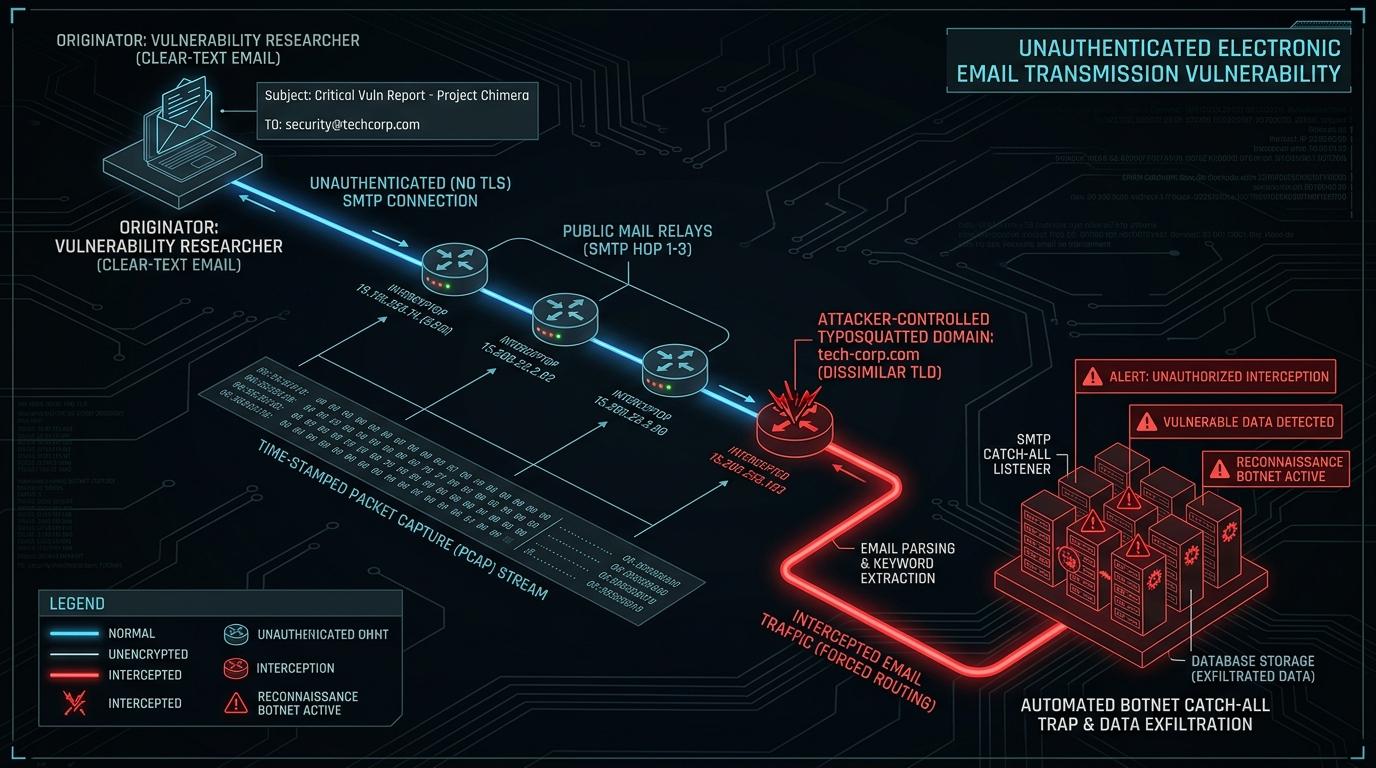
EVIDENTIARY CAPTURE:Forensic telemetry routing map illustrating how unencrypted vulnerability reports traversing public relays are diverted into typosquatted lookalike catch-all traps.
03 · Phase 2: Tracked Physical Custody (The Secured Envelope Protocol)
To eliminate the risks of digital interception, typosquatting traps, and gatekeeper deletion, specialized infrastructure practices deploy a Chain-of-Custody Physical Disclosure Standard for all initial vulnerability notices.
Initial audit memorandums are sealed within rigid, tracked document courier mailers (such as UPS, FedEx, or Canada Post Priority) and delivered directly to the physical desk of corporate leadership (the President, Managing Director, or Chief Operating Officer):
1. Zero Digital Signature Prior to Isolation:
A printed risk brief contained inside a sealed physical envelope cannot be scraped by autonomous internet crawlers, indexed by search bots, or parsed by commercial cloud mail filters. The disclosure exists strictly in physical space until the executive verifies the issue.
2. Absolute Chain-of-Custody Verification:
Unlike standard email, where delivery receipts merely indicate that a server accepted a packet, commercial tracked couriers log minute-by-minute physical custody. Within minutes of a courier delivery, tracking confirms the exact timestamp, facility movement, and individual signature of the recipient. It is impossible to lose track of where the briefing is or who has accepted physical possession of the document.
3. Desk Permanence & Undiluted Privacy:
A sealed, confidential courier mailer addressed to the executive principal is treated as high-priority corporate logistics. Administrative assistants do not open sealed executive dispatches; they place them directly on the principal's physical blotter. The confidential memorandum is reviewed in full privacy, ensuring that remediation options can be evaluated before any external adversary learns of the vulnerability.

EVIDENTIARY CAPTURE:Physical attestation dispatch sealed under rigid tamper-evident envelope and authenticated tracking attestation delivered directly to executive leadership.
04 · Phase 3: The Transition to Authenticated Digital Communications
The physical envelope protocol is strictly an initial-contact mechanism designed to establish verified contact safely.
Once the executive receives the physical memorandum, confirms the findings, and initiates contact via the designated intake channels, communication transitions to high-assurance digital channels:
1. Mutual Identity Verification:
Both organizations have verified the identity, corporate standing, and operational legitimacy of their counterparts. The danger of unvetted third-party deception or misdirected correspondence is removed.
2. Cryptographic Record Enforcement:
Ongoing operational reviews and technical fixes are conducted across authenticated email channels secured by strict SPF, 2048-bit DKIM cryptographic signatures, and enforced DMARC policies.
3. Encrypted Collaboration:
Detailed system architectures, code repositories, and operational monitoring feeds are transferred using encrypted, access-controlled repositories, ensuring end-to-end operational confidentiality from perimeter remediation through to ongoing infrastructure maintenance.
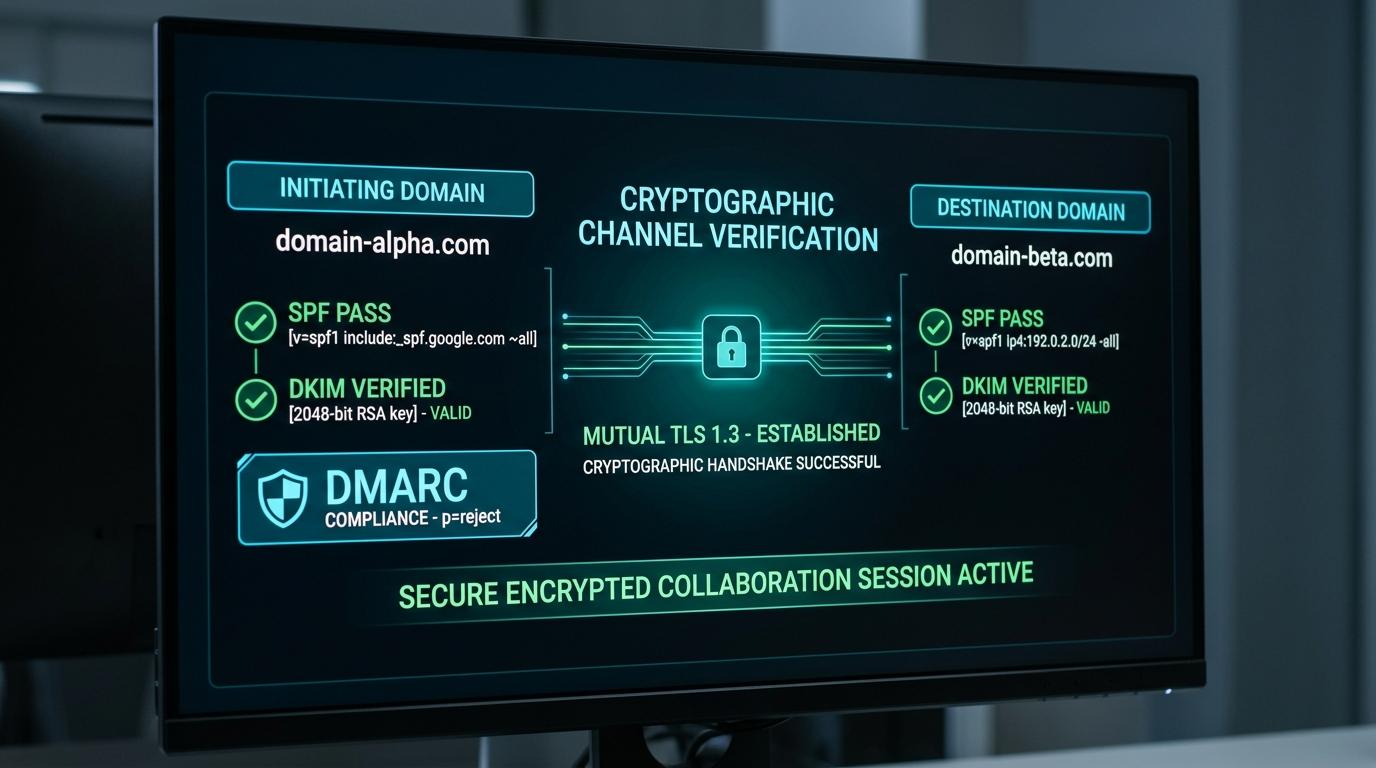
EVIDENTIARY CAPTURE:Authenticated enterprise collaboration terminal demonstrating mutual SPF pass, 2048-bit DKIM validation, and DMARC reject enforcement over mutual TLS 1.3 tunnels.
05 · The Governance Standard & Discretionary Remediation
In enterprise operations, the method of disclosure is just as critical as the technical finding itself.
Broadcasting infrastructure vulnerabilities across unverified digital routes is an irresponsible shortcut that exposes organizations to intercepted warnings and weaponized typosquatting.
By adhering to strict, physical chain-of-custody protocols for all initial security briefings, commercial leaders receive the actionable intelligence necessary to isolate open assets with absolute discretion and zero digital exposure.